
The Integrity Blog
Insight into what questions dental and medical practices should ask managed IT providers as they are searching for one. The checklist also dives into red flags to be on the look-out for.
If you're a healthcare provider, you already know that HIPAA compliance is mandatory. But ask 10 practices how they manage HIPAA and you’ll get 10 different answers — some better than others. So what separates organizations that truly succeed at HIPAA from those that struggle to keep up?
Share
Protecting patient information isn’t optional — it’s the law. This outline-style guide is designed to help dental practices understand and implement the core requirements of HIPAA, providing a structured overview of the rules, responsibilities and safeguards every dental team must follow to remain compliant.
Share
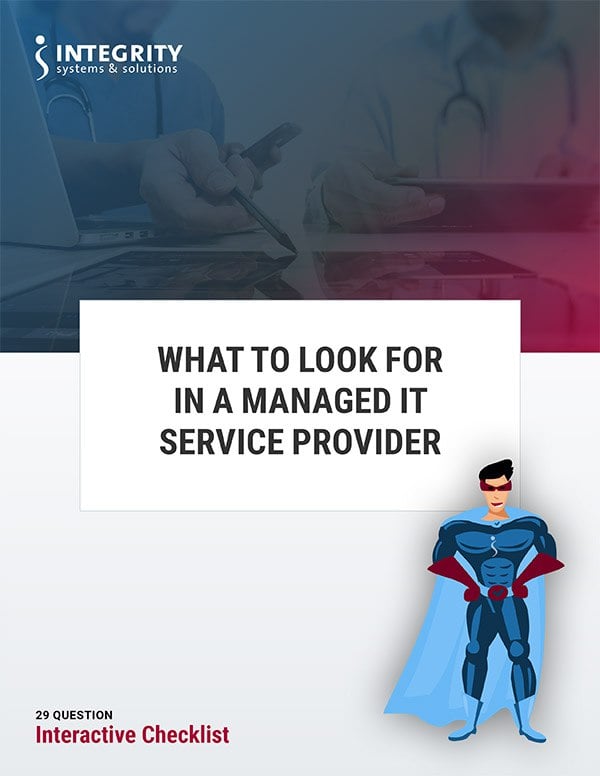
Insight into what questions dental and medical practices should ask managed IT providers as they are searching for one. The checklist also dives into red flags to be on the look-out for.
As healthcare organizations face increasing cybersecurity threats and stricter compliance demands, the upcoming end of support for Windows 10 in October 2025 marks a critical turning point. Continuing to operate on an outdated system could put patient data, operational efficiency and HIPAA compliance at serious risk. This blog explores why the transition is essential — and how it can be done without disrupting care.
Share
With Windows 10 support ending in October 2025, healthcare practices must prepare now to maintain HIPAA compliance and safeguard patient data. Windows 11 offers key security upgrades, with organizations reporting a 62% drop in security incidents and a threefold reduction in firmware attacks. These improvements make Windows 11 an essential step for any practice managing sensitive information.
Share
With Windows 10 support ending in October 2025, healthcare practices will face even more security risks. Without regular updates, systems become vulnerable to cyberattacks, data breaches, and subsequent compliance violations. Unsupported software lacks essential security patches, leaving patient data exposed and putting practices at risk of HIPAA and PCI violations.
Share
Healthcare practices in the U.S. are increasingly targeted by cyber threats, putting sensitive patient data and critical operations at risk. With the rise of ransomware, phishing and insider threats, the stakes to invest in cybersecurity have never been higher.
Share