The Integrity Blog
Insight into what questions dental and medical practices should ask managed IT providers as they are searching for one. The checklist also dives into red flags to be on the look-out for.
If you’ve completed your annual vCIO strategic meeting with us, your practice already has a custom technology roadmap in place. Now that we are in Q4, it’s time to pull out that plan and execute the final milestones before the calendar turns.
Share
Protecting patient records (PHI) and keeping your operatories running requires constant vigilance. This October, we encourage practice managers and doctors to review these four critical cybersecurity pillars with their teams:
Share
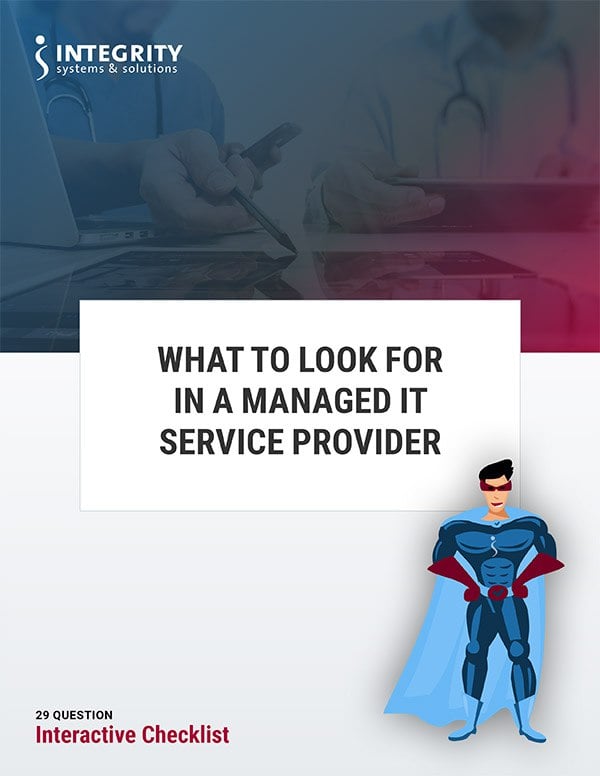
Insight into what questions dental and medical practices should ask managed IT providers as they are searching for one. The checklist also dives into red flags to be on the look-out for.
When workstations, servers, or network switches are still running every morning, it’s easy to think, "If it isn't broken, why spend money to replace it?" In a busy 10 to 50 workstation practice, hardware doesn't fail all at once. Instead, it ages slowly, silently bleeding revenue through lost time, frustrated staff, and compromised patient experiences.
Share
This November, Integrity Systems & Solutions marks 30 years of supporting dental practices across Connecticut, Massachusetts, and Rhode Island. When we started three decades ago, "dental technology" meant a single computer at the front desk handling appointment scheduling and basic billing. Today, a busy 10 to 50 workstation practice relies on digital imaging, complex network infrastructure, and real-time integration across every operatory. While technology has evolved, the real driver behind our success has always been our people. Tools and hardware don't build long-term relationships—attentive, accountable humans do. Every day, our dedicated engineers, account managers, and support technicians embody the three core standards that define our business:
Share
As the October 2025 end-of-support date for Windows 10 approaches, healthcare organizations must start preparing now. Continuing to rely on unsupported systems can put your practice at serious risk — from cybersecurity threats to regulatory violations and operational disruptions.
Share
As Windows 10 reaches its end of support in October 2025, healthcare organizations must act now to avoid serious risks to data security, compliance, and operational performance.
Share